Ribbon Eels: The Enigmatic Serpents of the Sea

Ribbon eels, also called Rhinomuraena quaesita is among the most captivating and enigmatic creatures that reside in the ocean. These are some of the most interesting animals that any marine biologist, scuba diver or underwater hobbyist could ever hope to encounter due to their bright colors, snake-like appearance, and peculiar habits. This article examines various aspects of ribbon eels, including their biology, habitat, behavior and their contribution towards the wellbeing of the ocean ecology.
The Striking Appearance of Ribbon Eels

Ribbon eels are famous for their impressive and vivid coloring. They experience a remarkable change in color as they progress through their life cycle, setting them apart from other sea creatures. Young ribbon eels are usually black with a yellow dorsal fin, but this changes as they grow older. Adult males display a vibrant blue hue with yellow highlights, while females are mostly yellow. This coloring is not only visually striking but also serves several important biological purposes, such as camouflage and signaling.
Anatomy and Physical Features
A ribbon eel is a kind of snake with an extended body, which can be up to 1.3 meters long. It possesses slim bodies that have a long dorsal fin almost running through the entire length of its body, hence its name “ribbon”. The anterior nostril is unique in this species and it resembles a tube, which helps them smell very well. This adaptation has great significance when chasing prey and moving around their habitat.
Habitat and Distribution
Ribbon eels are indigenous to the Indo-Pacific area, spanning from the eastern coast of Africa to southern Japan and Australia. They are commonly located in shallow lagoons and coral reefs, preferring sandy or rubble bottoms. Ribbon eels are recognized for their burrowing habits, as they frequently construct burrows in the substrate to dwell in for extended periods. These burrows function as a sanctuary from predators and a strategic location for ambushing prey. They are present in the Similan national park.
Environmental Preferences
Ribbon eels are commonly found in warm, tropical waters where temperatures typically fall between 24 and 28 degrees Celsius. They tend to inhabit depths ranging from 1 to 60 meters, flourishing in areas characterized by extensive coral reefs and a wide variety of marine species. The well-being of coral reef ecosystems plays a vital role in the sustainability of ribbon eels, as these environments offer essential nourishment and protection for the species.
Diet and Feeding Behavior
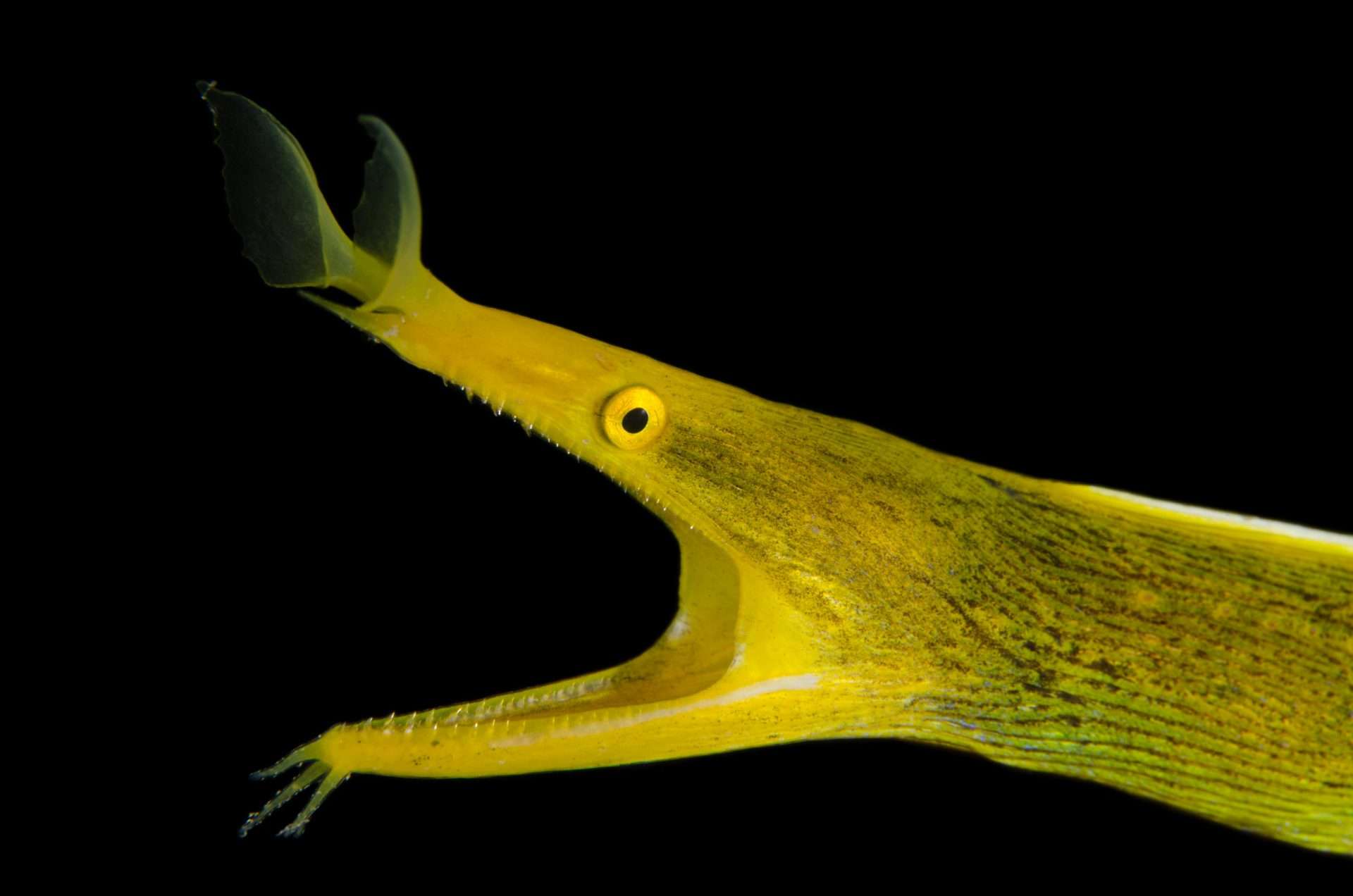 Ribbon eels primarily feed on small fish and crustaceans, showcasing their carnivorous nature. They rely on their keen sense of smell and quick reflexes to capture prey, often waiting in burrows with only their heads exposed before striking with lightning speed. Their diet may vary depending on prey availability, but they are considered opportunistic feeders.
Hunting Techniques
Ribbon eels have a unique jaw structure that enables them to effectively catch and consume prey. They possess two sets of jaws: the oral jaw, which captures the prey, and the pharyngeal jaw, which moves the prey from the mouth to the esophagus. This mechanism ensures that once a prey item is caught, it is unlikely to escape.
Reproduction and Life Cycle
The reproductive biology of ribbon eels is just as intriguing as their appearance. They are protandric hermaphrodites, starting as males and potentially transitioning into females later in life. This sex change is influenced by social and environmental factors, allowing them to adapt to changing population dynamics. The life cycle of ribbon eels consists of three phases: juvenile, male, and female.
Spawning and Growth
Ribbon eels release eggs and sperm into the water column during spawning. The fertilized eggs develop into planktonic larvae, drifting with ocean currents until settling on the substrate and transforming into juveniles. Juveniles are characterized by their black coloration, which changes as they mature. The entire life cycle, from egg to adult, can span several years, with the male-to-female transition typically occurring later in life.
Ecological Function and Significance
Ribbon eels play a crucial part in upholding the equilibrium of coral reef ecosystems. By preying on small fish and crustaceans, they assist in controlling their populations, thereby contributing to the overall well-being and steadiness of the reef community. Moreover, their burrowing activities impact the substrate’s structure, fostering biodiversity by creating microhabitats for various marine organisms.
Interactions with Other Species
Ribbon eels engage in a symbiotic relationship with specific cleaner fish species, which aid in removing parasites from their bodies. This mutually beneficial interaction benefits both parties: the cleaner fish obtain a food source, while the ribbon eels maintain optimal health. Furthermore, ribbon eels serve as prey for larger predators like groupers and moray eels, underscoring their essential role in the food chain.
Status of Conservation and Threats
Despite their ecological significance, ribbon eels confront numerous threats that could jeopardize their populations. Habitat degradation, particularly the destruction of coral reefs, poses a substantial risk to their survival. Overfishing and the aquarium trade also contribute to their decline, as ribbon eels are frequently captured for their visually striking appearance.
Efforts for Conservation
Conservation initiatives focused on safeguarding coral reef habitats are imperative for the preservation of ribbon eels. Marine protected areas (MPAs) and sustainable fishing practices help alleviate some of the pressures on their populations. Additionally, raising public awareness about the ecological role of ribbon eels and the importance of preserving marine biodiversity can cultivate greater recognition and backing for their conservation.
Interesting Tidbits About Ribbon Eels
1. Color Metamorphosis: The transition from black to blue and yellow in ribbon eels represents one of the most striking transformations in the animal kingdom.
2. Longevity: Ribbon eels can survive up to 20 years in the wild, with their lifespan influenced by environmental conditions.
3.Social Behavior: Ribbon eels are typically solitary creatures, yet they are capable of displaying social interactions like cooperative hunting alongside other species.
4.Sensory Abilities: Ribbon eels possess a highly developed sense of smell and a distinctive nostril structure, which contribute to their exceptional hunting skills.
5.Cultural Significance:In various societies, ribbon eels hold symbolic value representing transformation and adaptability, owing to their distinct life cycle and color variations.
Observing Ribbon Eels in their Natural Habitat
For those who enjoy diving and have an interest in marine life, encountering a ribbon eel in its natural environment is an unforgettable experience. These elusive creatures can be seen during dives in tropical coral reefs, often peeking out from their burrows. Patience and respect for their space are essential when observing ribbon eels, as sudden movements or disturbances can cause them to retreat.
Diving Recommendations
1. Remain Calm: Approach ribbon eels slowly and avoid sudden movements to prevent startling them.
2. Keep Distance: Maintain a respectful distance to observe their natural behavior without causing stress.
3. Use a Red Filter: Using a red filter on your dive light can help minimize disturbance, as ribbon eels are less sensitive to red light.
4. Observe at Dusk: Ribbon eels are more active during low light conditions, making dawn or dusk ideal times for observation.
Conclusion
Ribbon eels exemplify the marvels of marine life, highlighting the beauty and intricacy of the ocean’s residents. Their striking colors, distinctive behaviors, and ecological importance render them a captivating and significant subject. Safeguarding ribbon eels and their environments is crucial for preserving the vitality and variety of coral reef ecosystems, guaranteeing that forthcoming generations can still admire these mysterious sea serpents.
About The Author

Connect with Khao Lak Explorer on:




WhatsApp +66 611195733
Line khaolakexplorerdive
Viber +66 611195733
WeChat Khao-Lak-Explorer
#KhaoLakExplorer
@KhaoLakExplorer
©2026 Khao Lak Explorer
Created by Khao Lak Explorer